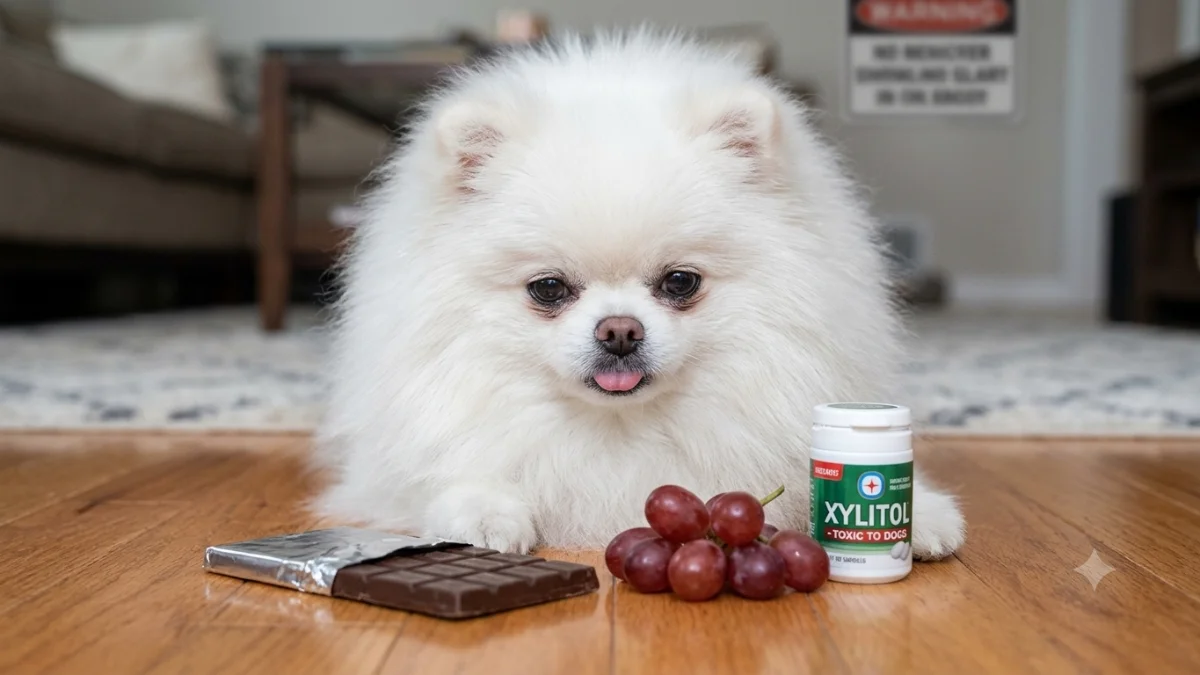
My Dog Ate Chocolate, Grapes, or Xylitol: Signs and What to Do
What to Do First
- Call your veterinarian right away. Do this even if your dog seems fine. Calling ahead lets the clinic prepare before you arrive.
- Note what your dog ate, how much, and when. This is the first thing the clinic will ask to judge the risk.
- In the US, you can also call the ASPCA Animal Poison Control Center at (888) 426-4435.
- First aid does not replace veterinary care. It only buys time until you reach the clinic, so always follow up with treatment.
At a Glance
| Food | Toxic agent | When signs appear | Good to know |
|---|---|---|---|
| Chocolate | Theobromine, caffeine | Usually within 6–12 hours | Higher cocoa content means higher risk |
| Grapes and raisins | Tartaric acid (proposed) | Vomiting or diarrhea within 6–12 hours, kidney failure within 72 hours | Reactions vary widely between dogs |
| Xylitol | Xylitol | As soon as 20 minutes | Even small amounts can cause low blood sugar |
1. Chocolate
The toxic agents in chocolate are theobromine and caffeine. Early signs include drinking a lot of water, vomiting, diarrhea, a swollen belly, and restlessness. In severe cases, irregular heartbeat and nervous system signs can be life-threatening. The fat in chocolate can also trigger pancreatitis.
About 62 g of milk chocolate per kg of body weight is potentially lethal. For a 10 kg dog, that is about 620 g. This is only the potentially lethal level, and signs can appear at much smaller amounts. Dark and baking chocolate contain more cocoa, so the same amount is more dangerous.
2. Grapes and Raisins
Grapes, raisins, and currants can cause acute kidney injury in some dogs. Tartaric acid is the leading proposed cause. Dogs are poor at clearing these organic acids, so they can build up in kidney cells.
In general, more than one grape or raisin per 4.5 kg of body weight may affect the kidneys. Because tartaric acid levels vary between grapes, the same amount can affect dogs very differently. Most affected dogs vomit or have diarrhea within 6–12 hours, and kidney failure, with little or no urine, usually develops within 72 hours. Do not wait for signs. Call right away.
3. Xylitol
Xylitol is a sugar substitute found in sugar-free gum, candy, baked goods, and toothpaste. It is safe for people, but in dogs it triggers a sudden release of insulin that makes blood sugar drop fast. Without treatment, this can quickly become life-threatening.
Signs can begin within 20 minutes and include vomiting, low energy, weakness, collapse, and seizures. Always use toothpaste made for pets when brushing your dog's teeth.
Other Dangerous Foods
Onions and garlic, macadamia nuts, and alcohol are also dangerous for dogs. See the ASPCA's list of people foods to avoid. You can get a rough risk check with our Toxic Food Calculator, but whatever the result, talk to your veterinarian first.
FAQ
Q. My dog ate some but seems fine. Can I just watch?
No. Kidney injury from grapes can show up as late as 72 hours, and xylitol signs can start within 20 minutes. Calling before signs appear gives the clinic more treatment options.
Q. My dog only ate a tiny bit. Do I still need to call?
Grapes and xylitol can cause problems in small amounts, and every dog reacts differently. Even if it was a small amount, call the clinic first and let them decide.
This article is general information and does not replace diagnosis or treatment by a veterinarian.
References
- Merck Veterinary Manual. Chocolate Toxicosis in Animals, 2026.
- Merck Veterinary Manual. Grape, Raisin, and Tamarind Toxicosis in Dogs.
- FDA Center for Veterinary Medicine. Paws Off Xylitol; It's Dangerous for Dogs.
- Merck Veterinary Manual. What to Do in a Dog or Cat Emergency.
- American Veterinary Medical Association. First aid tips for pet owners.
- American Society for the Prevention of Cruelty to Animals. People Foods to Avoid Feeding Your Pets.