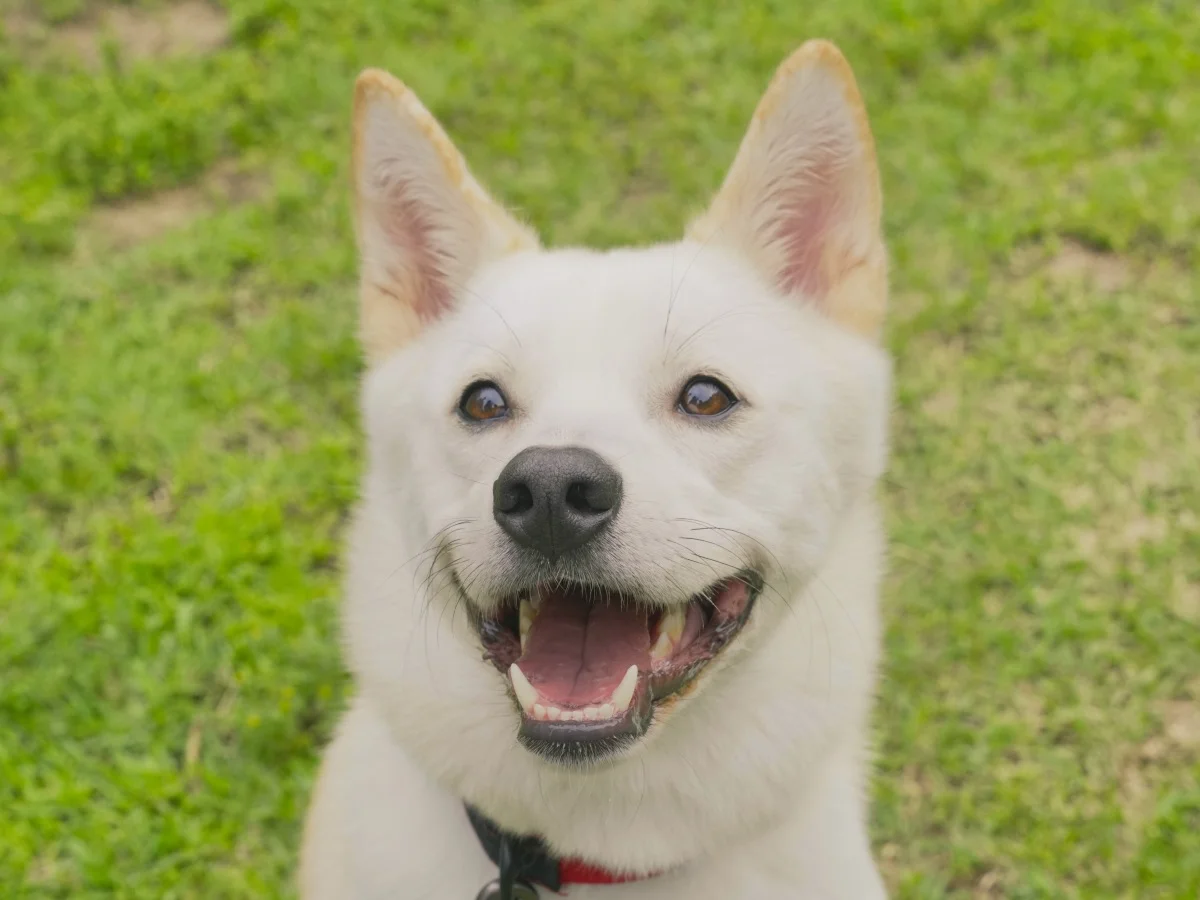
Korea's Native Dogs: The Jindo and the Sapsaree
Korea's Living Natural Monuments
Korea protects some of its native dog breeds as Natural Monuments. The Jindo of Jindo Island is No. 53, designated on December 3, 1962, and the Sapsaree is No. 368. The two breeds look and act very differently, but both are closely tied to Korean history.
At a Glance
| Jindo | Sapsaree | |
|---|---|---|
| Natural Monument | No. 53 | No. 368 |
| Look | Erect ears, curled or sickle tail, double coat | Long shaggy coat, drooping ears |
| Height | Males 50–55 cm, females 45–50 cm (FCI) | About 49–55 cm |
| Colors | Red fawn, white, black, black and tan, wolf grey, brindle | Mainly blue-gray and yellow |
| Temperament | Very loyal, strong hunting instinct, often not good with other animals | Friendly, protective, loyal |
| International recognition | FCI (Group 5), UKC, UK Kennel Club | Not on the FCI breed list |
The Jindo: An Island Hunter
There is no written record of the Jindo's origin, but the FCI notes that the most widely accepted view is that the breed has lived on Jindo Island, off Korea's southwestern tip, for thousands of years. Difficult access to the island helped keep the bloodline pure.
The Jindo is now known well beyond Korea. The FCI lists it as breed no. 334 in Group 5 (Spitz and primitive types), the United Kennel Club in the US has an official breed standard, and the UK Kennel Club registers it as the Korean Jindo. Still, the UK Kennel Club notes that Jindos have left Korea only in recent years and in small numbers.
The Sapsaree: Saved From Extinction
The Sapsaree nearly disappeared during the Japanese colonial period and the Korean War, and by the mid-1980s it was close to extinction. Systematic genetic conservation brought it back. A 2019 study counted about 4,000 Sapsarees, including 500 at a dedicated breeding research institute in Gyeongsan, Korea.
Genetic research has turned up surprises. The Sapsaree is closely related to the Tibetan Terrier and Lhasa Apso, and among East Asian breeds it shares the most genetic material with the German Shepherd.
If a Jindo Joins Your Family
Many people outside Korea first meet a Jindo through adoption. A few things from the breed standards are worth knowing.
- Loyalty takes time. The FCI describes the Jindo as a one-person dog that will accept a new owner but never forgets the one who raised it. An adult Jindo can bond with a new family, but give it time.
- Strong hunting instinct. Jindos often do not get along with other animals, especially males. Keep a firm grip on the leash and introduce other pets carefully.
- An experienced owner helps. The UK Kennel Club describes the Jindo as a breed that needs a specialist owner.
- Naturally clean. Jindos tend to keep themselves clean and eat sparingly.
For details, see our Jindo and Sapsaree breed pages.
FAQ
Q. Will an adult Jindo bond with a new family?
Yes, but it may take time. The FCI describes the Jindo as a dog that will accept a new owner while never forgetting the one who raised it. Patience and a calm routine help.
Q. Is a Jindo a good first dog?
The UK Kennel Club describes the Jindo as a breed that needs a specialist owner. Its independence and strong hunting instinct call for experience with leash control and introductions to other animals.
Q. Can I find a Sapsaree outside Korea?
It is rare. The population was about 4,000 dogs in 2019, most of them in Korea, and the breed is not on the FCI breed list.
This article is general information and does not replace advice from a veterinarian or a qualified trainer.
References
- Korea Heritage Service. Jindo Dog of Jindo (Natural Monument No. 53).
- Fédération Cynologique Internationale. FCI-Standard N° 334 – Korea Jindo Dog.
- Fédération Cynologique Internationale. FCI Breeds Nomenclature: Korea Jindo Dog (334), 2005.
- United Kennel Club. Jindo Official UKC Breed Standard, 2009.
- The Kennel Club. Korean Jindo (Imp).
- BMC Genetics. Genetic diversity and population structure of the Sapsaree, a native Korean dog breed, 2019.
- Journal of Animal Science and Technology. Whole-transcriptome analyses of the Sapsaree, a Korean natural monument, before and after exercise-induced stress, 2016.
- iScience. Origin and population structure of native dog breeds in the Korean peninsula and East Asia, 2023.