Jindo

Last reviewed: November 12, 2026

Jindo
Weight
15–23 kg
Height
45–55 cm
Origin
Korea
FCI group
Spitz and Primitive Types

Overview

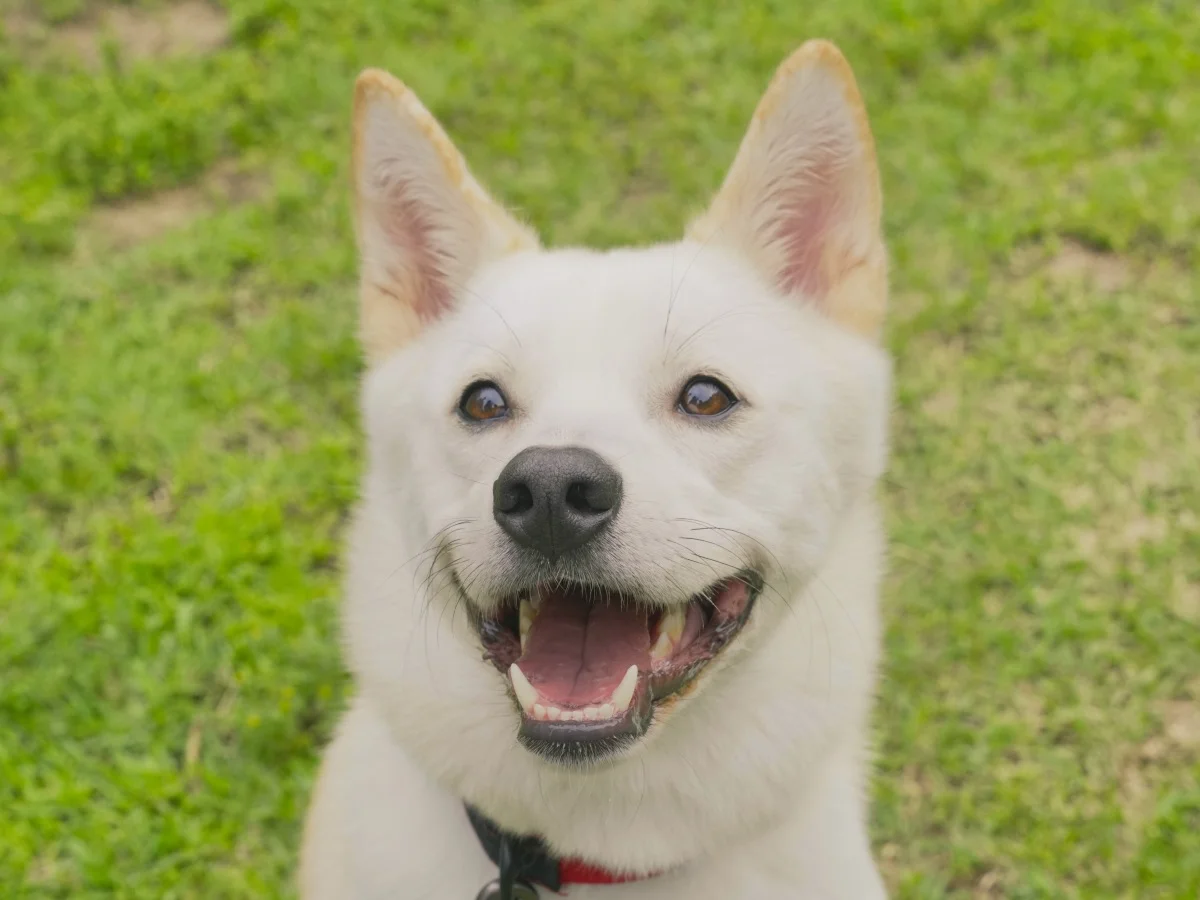
The Jindo is Korea's best-known native dog, a medium-sized hunting and guard dog from Jindo Island at the southwestern tip of the Korean peninsula. It has erect ears and a tail that is rolled or carried in a sickle shape.

According to the Fédération Cynologique Internationale (FCI), there is no written record of its origin, but the most widely accepted view is that it is native to Korea and has lived on Jindo Island for thousands of years; the island's isolation helped preserve the breed. The FCI recognized the Jindo as a definitive breed in 2005.

According to the National Archives of Korea, the Jindo was first designated a natural monument in 1938, was designated Natural Monument No. 53 under the Cultural Heritage Protection Act in 1962, and is protected under the Korea Jindo Dog Protection Act enacted in 1967.

Size: The FCI standard calls for a height at the withers of 50–55 cm (ideal 53–54 cm) for males and 45–50 cm (ideal 48–49 cm) for females, and a weight of 18–23 kg for males and 15–19 kg for females.
Coat & Color

Coat: A double coat: a soft, dense undercoat supports a stiff outer coat that stands slightly off the body. The hair is shorter on the head, legs, and ears, longer on the neck, withers, and back, and longest on the tail and the backs of the thighs.

Color: The FCI accepts red fawn, white, black, black and tan, wolf grey, and brindle.

Temperament

The FCI standard describes the Jindo as having a very strong hunting instinct—bold, brave, alert, and careful. Above all, it is extremely faithful to its owner and reserved with strangers.

It is generally not fond of other animals, especially males, and has a good sense of direction. It is a one-person dog that will accept a new owner but never forgets the one who raised it. It keeps itself clean and eats little.

Care

  • Other animals: The hunting instinct is strong and Jindos tend not to like other animals. Keep your distance and a firm hold on the leash when meeting other dogs or small animals.
  • Socialization: Jindos are reserved with strangers, so socialize early. See Puppy Socialization.
  • Exercise: An active dog bred for hunting. See our Dog Walking Guide.

Common health issues

Among the recognized sources Kinette has reviewed, there is no Jindo-specific recommended health-testing list. Schedule regular veterinary checkups.

The FCI standard disqualifies aggressive or overly shy dogs, overshot or undershot bites, and dogs missing more than three teeth.

FAQ

Is a Jindo really loyal to only one owner?

The FCI standard calls the Jindo a one-person dog that accepts a new owner but never forgets the one who raised it.

Do Jindos get along with other dogs?

According to the FCI standard, Jindos are generally not fond of other animals, especially males. Socialize early and keep your distance when meeting other dogs.

References

  1. Fédération Cynologique Internationale. FCI-Standard N° 334 – Korea Jindo Dog (Spanish edition), 2005.
  2. National Archives of Korea. Jindo Dog – Korea Through Records.

Other breeds

Feature on this breed

Breed Features

Korea's Native Dogs: The Jindo and the Sapsaree

Korea protects its native dog breeds as Natural Monuments. The Jindo is a loyal, independent hunting dog from Jindo Island, now recognized by the FCI and kennel clubs in the US and UK. The Sapsaree is a shaggy, friendly dog that was brought back from the edge of extinction. Here is how the two compare and what to know if one joins your family.

Read the feature