Pungsan
Last reviewed: November 12, 2026
- Weight
- 20–30 kg
- Height
- 55–60 cm
- Origin
- Korea (Pungsan County, South Hamgyong)
- AKC group
- Not recognized
- FCI group
- Not recognized
Overview
The Pungsan is a native dog long kept in Pungsan County, South Hamgyong Province (now Kimhyonggwon County in North Korea), and is known as a brave hunting dog. According to the Encyclopedia of Korean Culture, the most convincing theory traces it to the Laika, a northern dog used to hunt tigers along Russia's Amur River.
It was designated Natural Monument No. 128 in June 1942, and after liberation North Korea designated it a natural monument and national dog.
Recognition: The Pungsan is not a recognized breed of the Fédération Cynologique Internationale (FCI) or the American Kennel Club (AKC).
Size: According to North Korean data, it is a medium-sized dog standing 55–60 cm, with a body length of 60–65 cm and a weight of 20–30 kg.
Coat & Color
Coat: Dense all over the body.
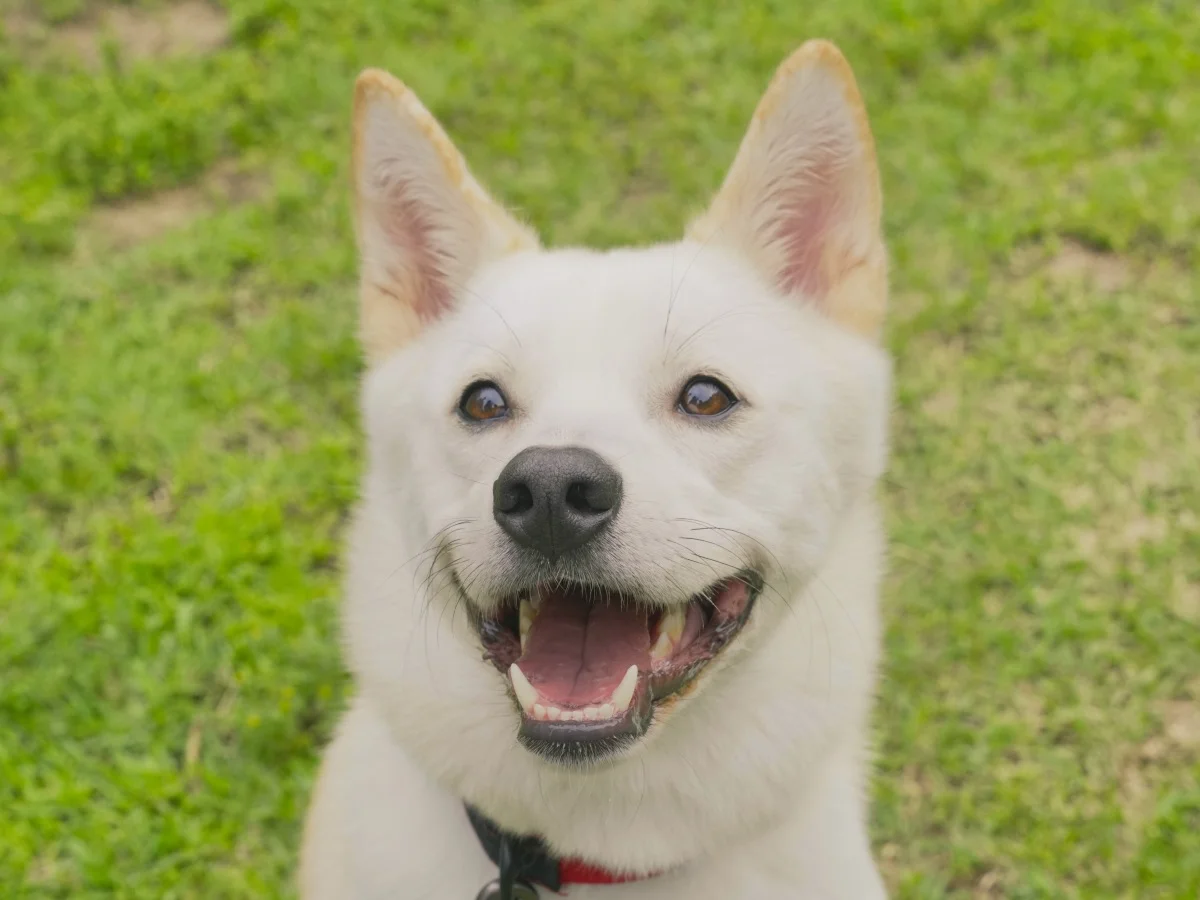
Color: White; some dogs have light grey hairs evenly mixed in.
Appearance: Triangular erect ears with tips bending slightly forward, and a curled tail with long, soft hair. During the Japanese colonial period, dogs with black eyes, nose, and muzzle (the "three blacks") were reportedly considered purebred.
Temperament
The Encyclopedia of Korean Culture describes the Pungsan as known for being a brave hunting dog. With no recognized breed standard, there is no official temperament description.
Care
- Exercise: A medium-sized dog bred for hunting that needs plenty of walks. See our Dog Walking Guide.
- Heat: A densely coated northern-type dog. See Heatstroke in Dogs.
- Socialization: Expose puppies to many people and settings early. See Puppy Socialization.
Common health issues
Because the Pungsan is not recognized by the FCI or AKC, there is no recommended health-testing list from a recognized registry. Schedule regular veterinary checkups.
FAQ
Is the Pungsan an internationally recognized breed?
No. The Pungsan is not recognized by the FCI or the AKC. It is a Korean native dog designated Natural Monument No. 128 in 1942.
How is the Pungsan different from the Jindo?
The Pungsan comes from Pungsan County in the north (South Hamgyong), while the Jindo comes from Jindo Island in the south. The Jindo is FCI-recognized (No. 334); the Pungsan is not.