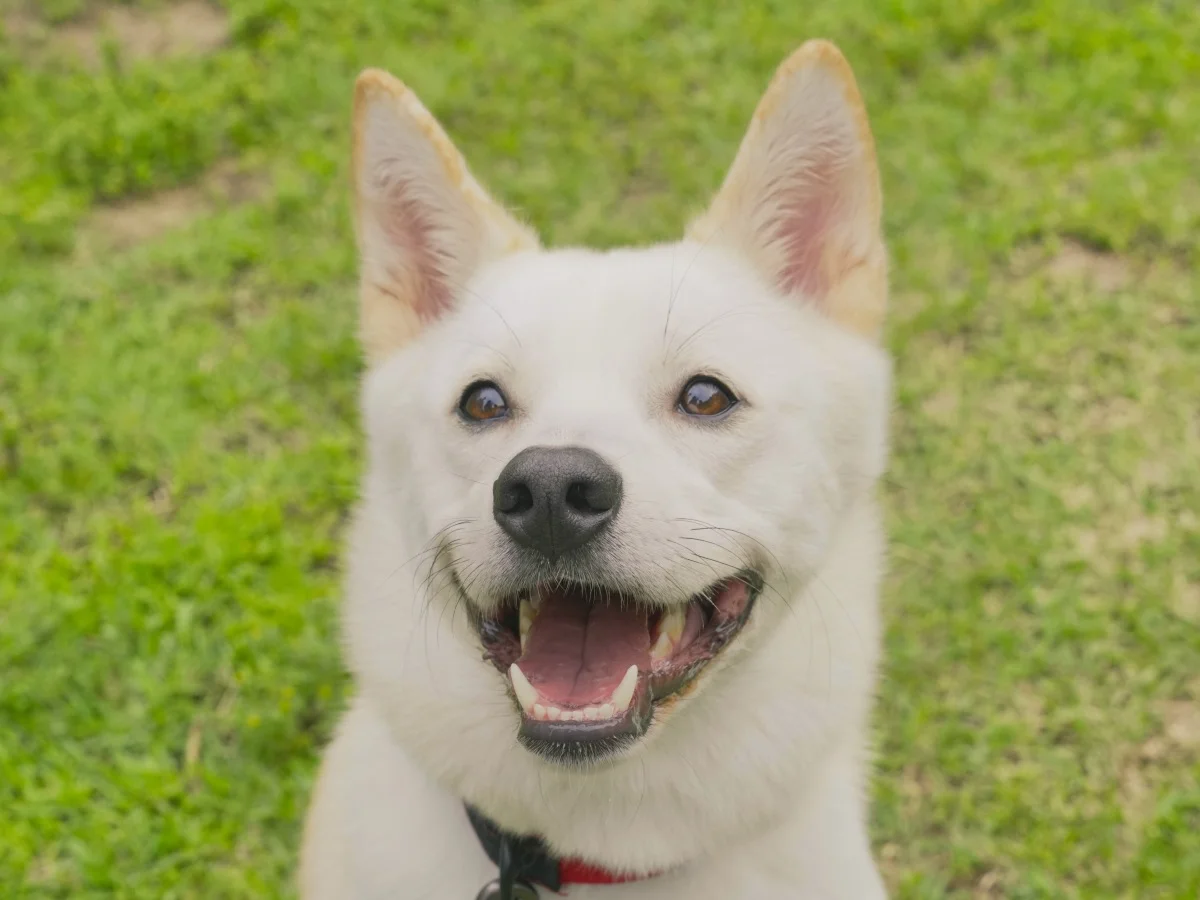
Great Pyrenees
Last reviewed: November 12, 2026
- Height
- 65–80 cm
- Origin
- France
- AKC group
- Working Group
- FCI group
- Pinscher and Schnauzer, Molossoid and Swiss Mountain and Cattle Dogs
Overview
The Great Pyrenees is recognized by the Fédération Cynologique Internationale (FCI) as the Pyrenean Mountain Dog, a large French mountain dog bred to guard flocks. According to the FCI, it has been present in the Pyrenees since time immemorial: it guarded castles in the Middle Ages, appears in 14th-century writing, and was prized at the court of Louis XIV in the 17th century. Its official standard was registered with the French Kennel Club in 1923, and today's standard remains very close to it.
Size: The FCI standard calls for a height at the withers of 70–80 cm for males and 65–75 cm for females, with a +2 cm tolerance for perfectly typed dogs.
Coat & Color
Coat: Well-furnished, flat, fairly long, and supple, longer on the tail and around the neck, with a thick undercoat.
Color: White, or white with grey (badger or wolf), pale yellow, or orange patches on the head, ears, and base of the tail. Badger-grey patches are the most appreciated.
Dewclaws: The FCI standard requires double dewclaws on each hind leg; missing or single hind dewclaws are eliminating faults.
Temperament
According to the FCI standard, the Great Pyrenees was selected to protect flocks from predators on its own, giving it strength and agility allied to gentleness and attachment to those it protects.
The standard notes its independence and sense of initiative, which demand a certain degree of authority from its owner.
Care
- Training: An independent breed that needs consistent training and early socialization. See Puppy Socialization.
- Coat care: The profuse coat and thick undercoat need regular brushing.
- Heat: A large, heavily coated dog. See Heatstroke in Dogs.
Common health issues
The recommended tests from the national breed club, as listed by the American Kennel Club (AKC):
| Recommended test | What it checks |
|---|---|
| Patella evaluation | Whether the kneecap slips out of place |
| Hip evaluation | Hip dysplasia |
Ask for the parents' results when choosing a puppy.
FAQ
Is it normal for a Great Pyrenees to have double dewclaws on the hind legs?
Yes. The FCI standard requires double dewclaws on each hind leg; missing or single dewclaws are disqualifying.
Are Great Pyrenees hard to train?
The FCI standard notes the breed's independence and sense of initiative, which demand some authority from the owner. Train consistently from puppyhood.